One press, no ceremony
Touch the mic and you are recording. Lift to send, slide to cancel, swipe up to lock so you can talk hands-free.
Half of Iraq talks in voice notes. Ashlonk treats them as the main event: the mic is the biggest button, recording starts the instant you touch it, and the note goes out even when the bar is barely there.
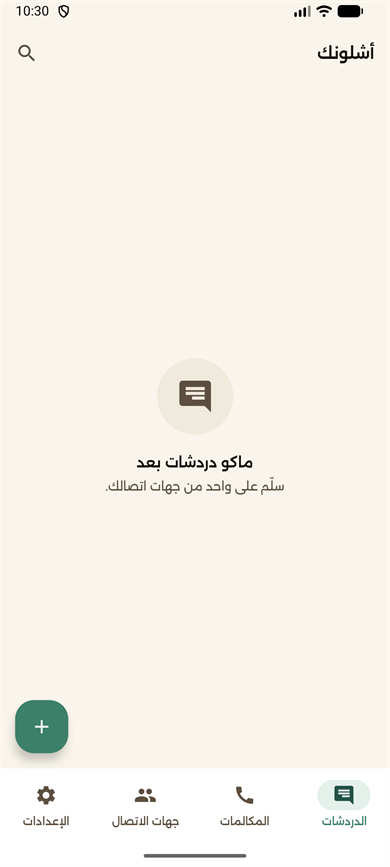
Touch the mic and you are recording. Lift to send, slide to cancel, swipe up to lock so you can talk hands-free.
Voice is compressed to around 12 KB per ten seconds. If the network drops, the note waits and goes the moment it returns.
1×, 1.5× or 2× speed; resume where you stopped; the waveform shows the long bits so you can skip the pause.
Voice notes are sealed on your phone and only opened on theirs. We never hear them — and neither does any transcription service.
Raise the phone to your ear and playback switches from speaker to earpiece automatically. Put it down and it switches back.
Reply to a specific voice note, forward it to a group, or save it to your phone — with the sender’s permission baked in.
Fifteen minutes per note. Longer than that and, honestly, it is a phone call.
Yes — swipe up to lock, then tap the stop button to preview. Play it back, trim the start, or discard it.
A one-minute note is roughly 75 KB, about the size of a small photo. On weak signal, Ashlonk lowers the bitrate slightly rather than failing.
On-device transcription is in testing so that encryption is preserved. It will be opt-in and will work in Iraqi Arabic first.
Get Ashlonk and send the note you would never have typed.
Coming soon to the App Store and Google Play.